How it works
Temperature transmitters are a key component in industrial temperature measurement. Their main function is to accurately convert, condition, and standardize the raw, weak, and nonlinear electrical signals detected by temperature sensors (such as thermocouples and resistance temperature detectors). Signal conversion and conditioning: They first amplify the weak signals and perform linearization processing (making the output signal proportional to the temperature). For thermocouples, cold junction compensation is also required to eliminate the effects of ambient temperature, and interference is filtered out. Standardized output: The processed signal is converted into an industrial standard signal, the most commonly used being the 4-20mA DC current signal with strong anti-interference capability (some are 0-10V, etc.), or digital signals (such as HART). Reliable transmission: Standard signals (especially 4-20mA) are suitable for long-distance transmission and have strong anti-interference properties. The "two-wire" design simplifies wiring (the same pair of wires provides power and transmits signals) and can directly drive display instruments or feed into control systems. Electrical isolation: Electrical isolation is usually provided to prevent interference and ensure system safety.
Key features
• Standard transmitter for meeting the requirements of conventional single-point measurement applications
• Housing structure offers excellent tolerance to a variety of process environments
• One-year stability guarantee, helping to save maintenance costs
• Open/short circuit sensor diagnostics assist in detecting sensor loop issues, ensuring reliable performance
• Device dashboard can serve as a simplified device configuration interface, executing diagnostic troubleshooting in a concise manner
• Transmitter-sensor matches Callendar-Van Dusen constants to reduce overall measurement errors
Typical applications
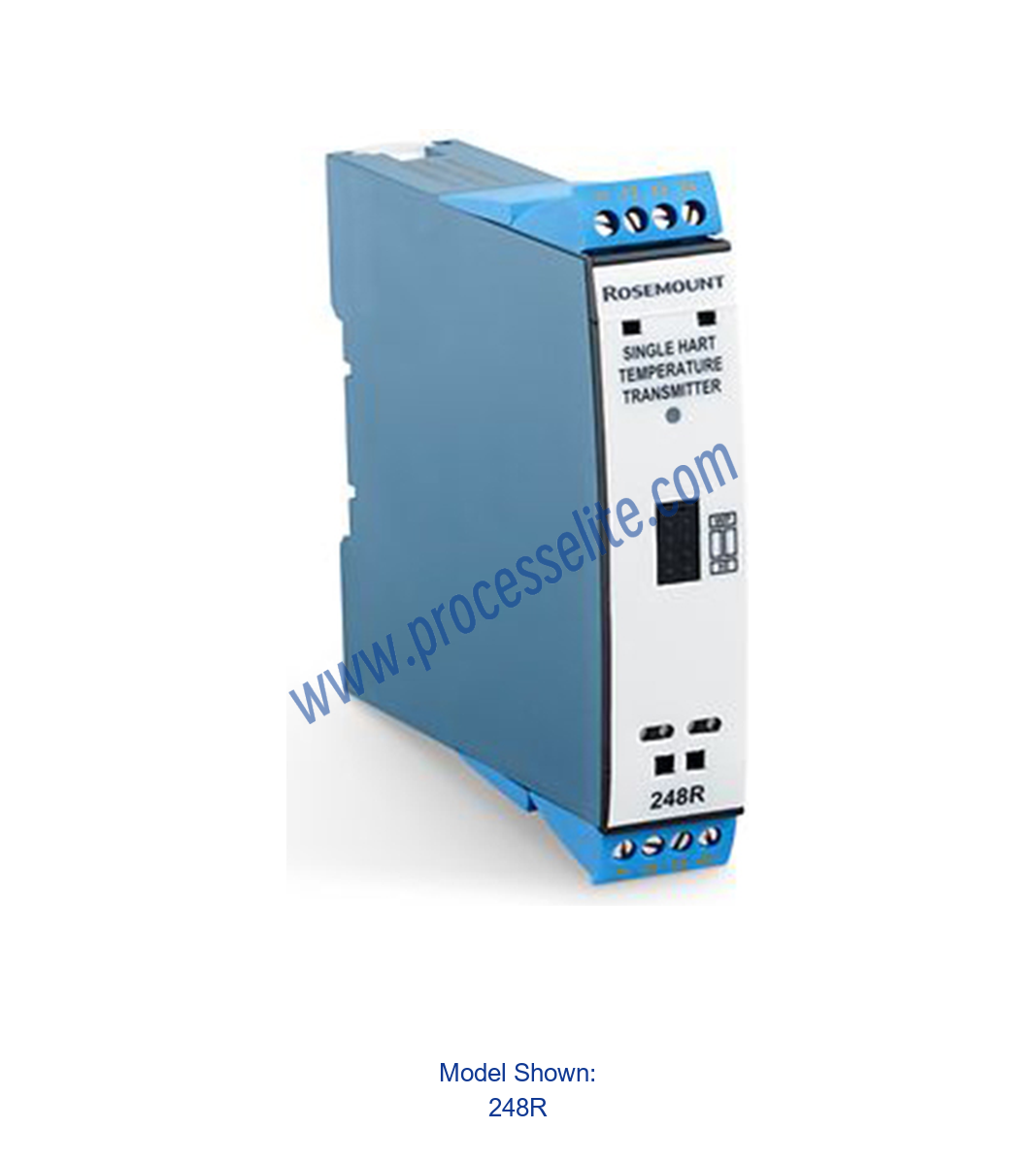
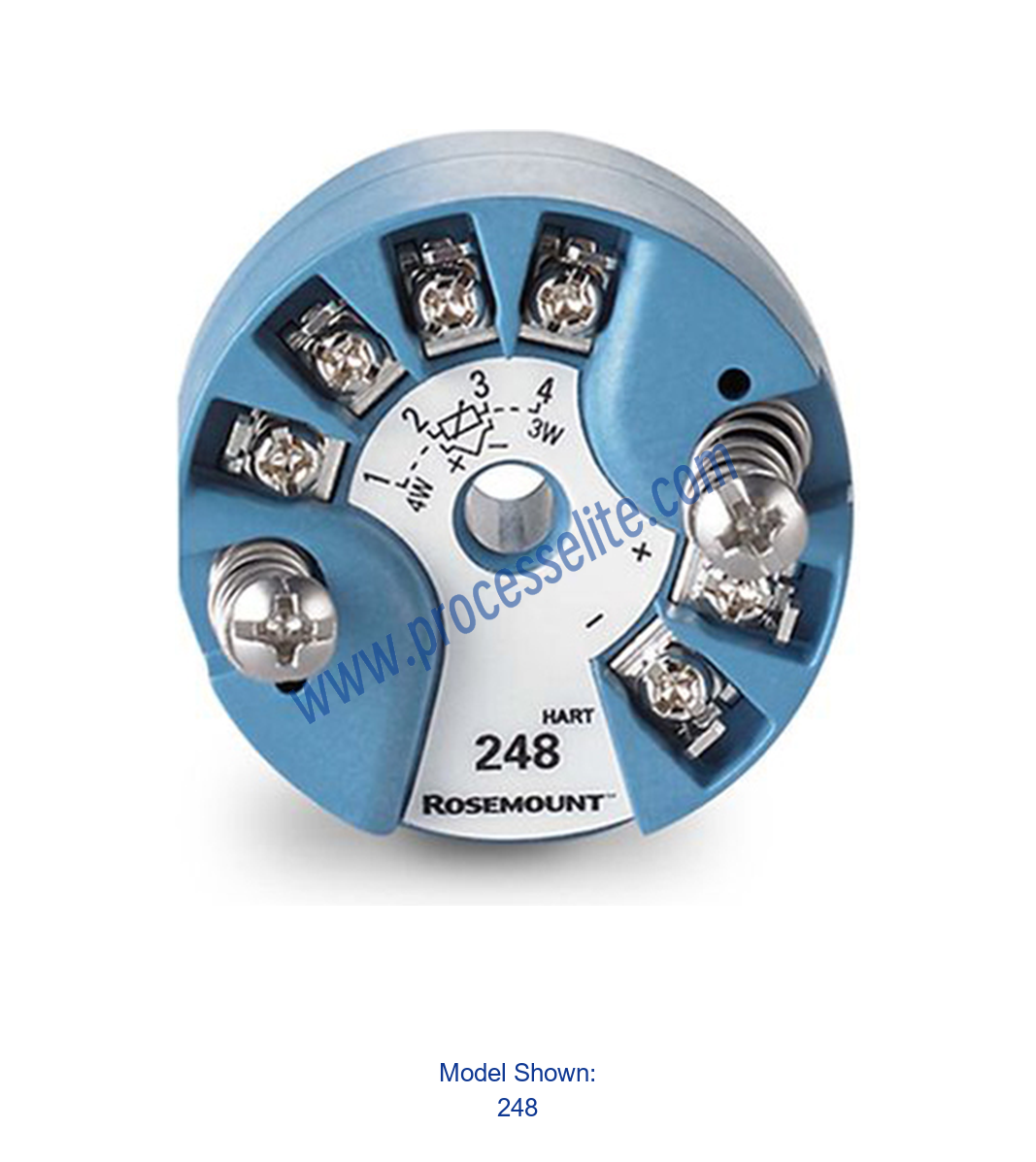
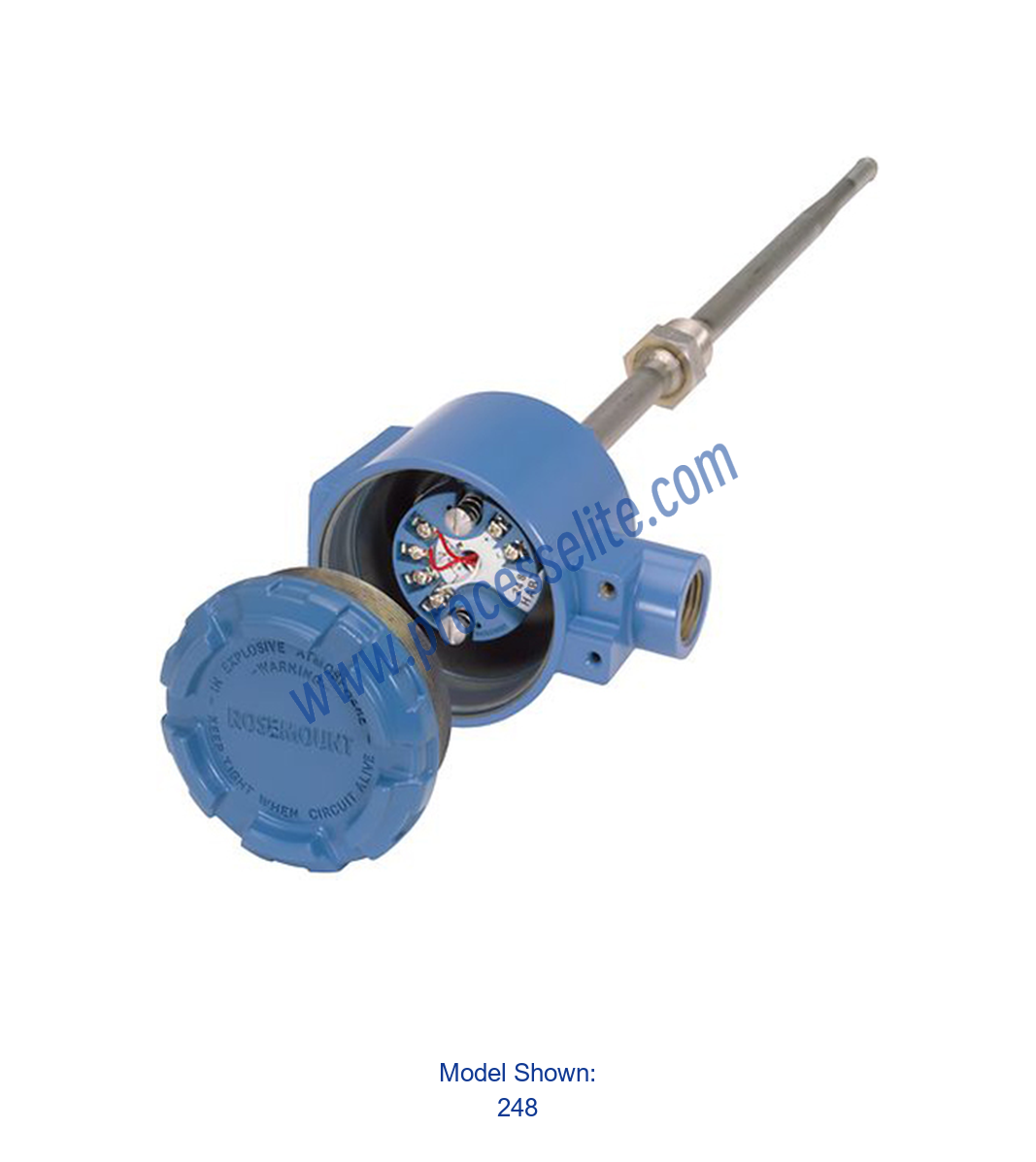
As an industry-standard solution, the Rosemount 248 temperature transmitter delivers consistent and reliable performance in process environments. It features a robust and durable design, capable of withstanding various process conditions, and meets the requirements of conventional single-point temperature measurement applications. For application flexibility, this top-mounted temperature transmitter offers multiple housing options.