How it works
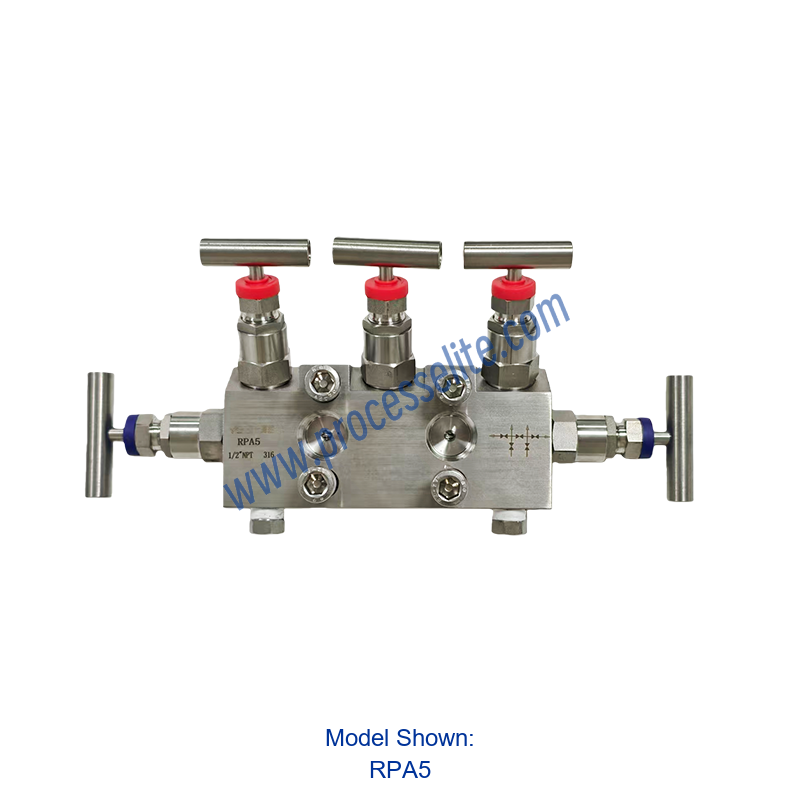
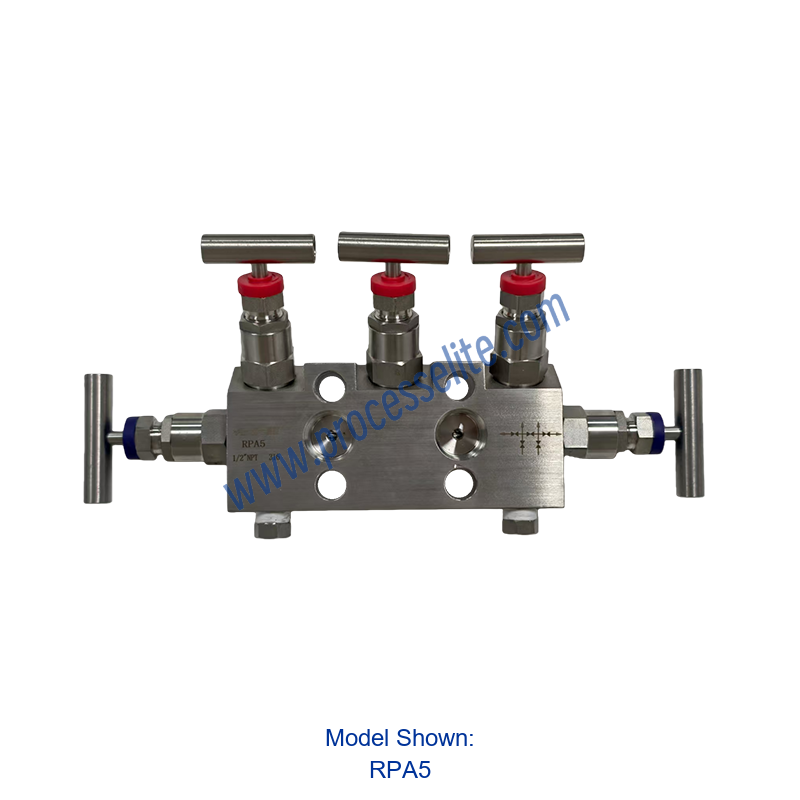
A five-valve manifold consists of a high-pressure valve, a low-pressure valve, an equalizing valve and two calibrating (vent/drain) valves. Its working principles are described as follows:
- Measuring Condition: Open the high-side and low-side shut-off valves, and close the equalizing valve as well as two calibrating valves. The positive and negative pressure measuring chambers of the differential pressure transmitter are connected to the high-pressure and low-pressure tapping points respectively to realize normal differential pressure measurement.
- Equalizing Condition: Close the high-side and low-side shut-off valves and open the equalizing valve to communicate the two measuring chambers for pressure equalization, which protects the transmitter diaphragm capsule from unidirectional pressure damage.
- Calibration Condition: Shut down the high and low pressure shut-off valves, and open the equalizing valve and two calibrating valves to calibrate and balance the transmitter.
- Draining Condition: Open the calibrating (drain) valves to discharge dirt and redundant media and keep the pipeline system clean.
Key features
- Compact Structure
Multiple valves are integrated into a single assembly to save installation space.
- Excellent Sealing Performance
Sealed with PTFE or flexible graphite to achieve zero leakage during stem operation.
- Easy Operation
Low operating torque delivers smooth and effortless manipulation.
- Wide Media Compatibility
Compatible with water, oil, gas and various corrosive media.
- Diversified Material Options
Valve body materials include 304 stainless steel, 316 stainless steel, titanium and Hastelloy, selectable for different working conditions.
- Broad Temperature & Pressure Range
Operating temperature: -54℃ ~ 648℃; maximum working pressure up to 6000 PSI.
Typical applications
- Petrochemical Industry: Measures and controls pressure and differential pressure of various fluids in petrochemical processes to secure stable and safe production.
- Pharmaceutical Industry: Realizes precise regulation of medicinal solutions to avoid cross-contamination during production.
- Food & Beverage Industry: Manages pipeline flow and pressure to guarantee product quality.
- Energy Industry: Regulates the flow and pressure of steam, water and other media in thermal power stations and other energy installations.
- Water & Wastewater Treatment: Controls water flow, water quality and pressure to maintain safe and hygienic water supply.
- Refrigeration and HVAC Systems: Regulates refrigerant flow, pressure and temperature to sustain normal system operation.