How it works
When the sensor is immersed in the process medium, oxygen partial pressure between the medium and the fluorescent layer rapidly reaches equilibrium. The sensor’s optical system emits a colored light pulse toward the fluorescent layer, and the indicator molecules respond by emitting a red light pulse. The duration and intensity of the response signal are directly related to the oxygen concentration and oxygen partial pressure.
In an oxygen-free medium, the response signal has a longer duration and higher intensity. The presence of oxygen molecules quenches the indicator molecules, resulting in a shorter response duration and lower signal intensity.
The sensor response is correlated with the dissolved oxygen concentration in the process medium. Atmospheric pressure can either be set as a fixed value or supplied by another sensor. The sensor also automatically records the process temperature internally, and both atmospheric pressure and temperature are taken into account when calculating the dissolved oxygen concentration.
Key features
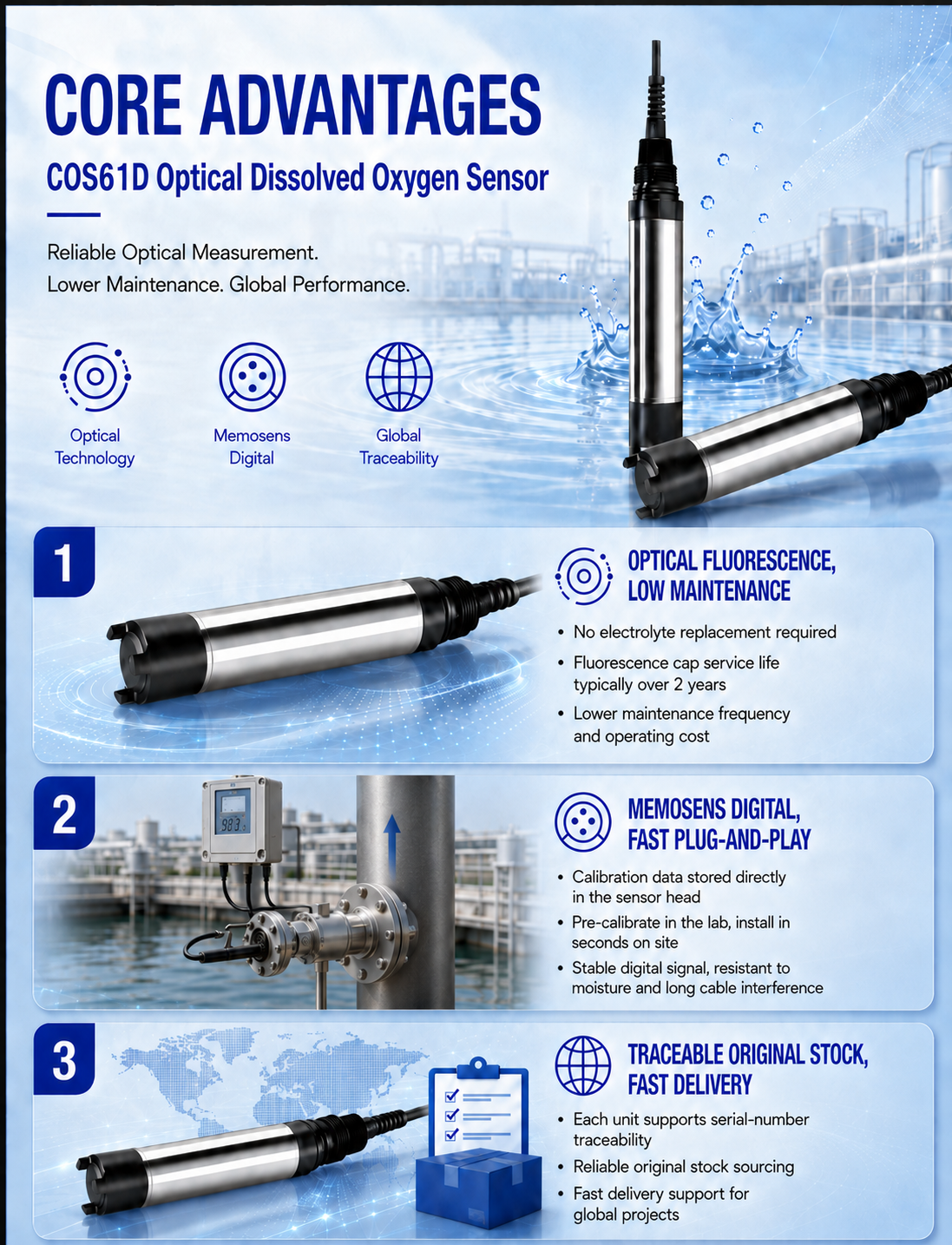
• Minimum maintenance and maximum plant availability
• Fast, drift-free measurement for precise aeration control and reliable process monitoring
• Long-term measurement stability for enhanced process safety
• Outstanding performance across all aeration processes, including SBR, Anammox, and more
• Chemical-free operation with no electrolyte handling required
Typical applications
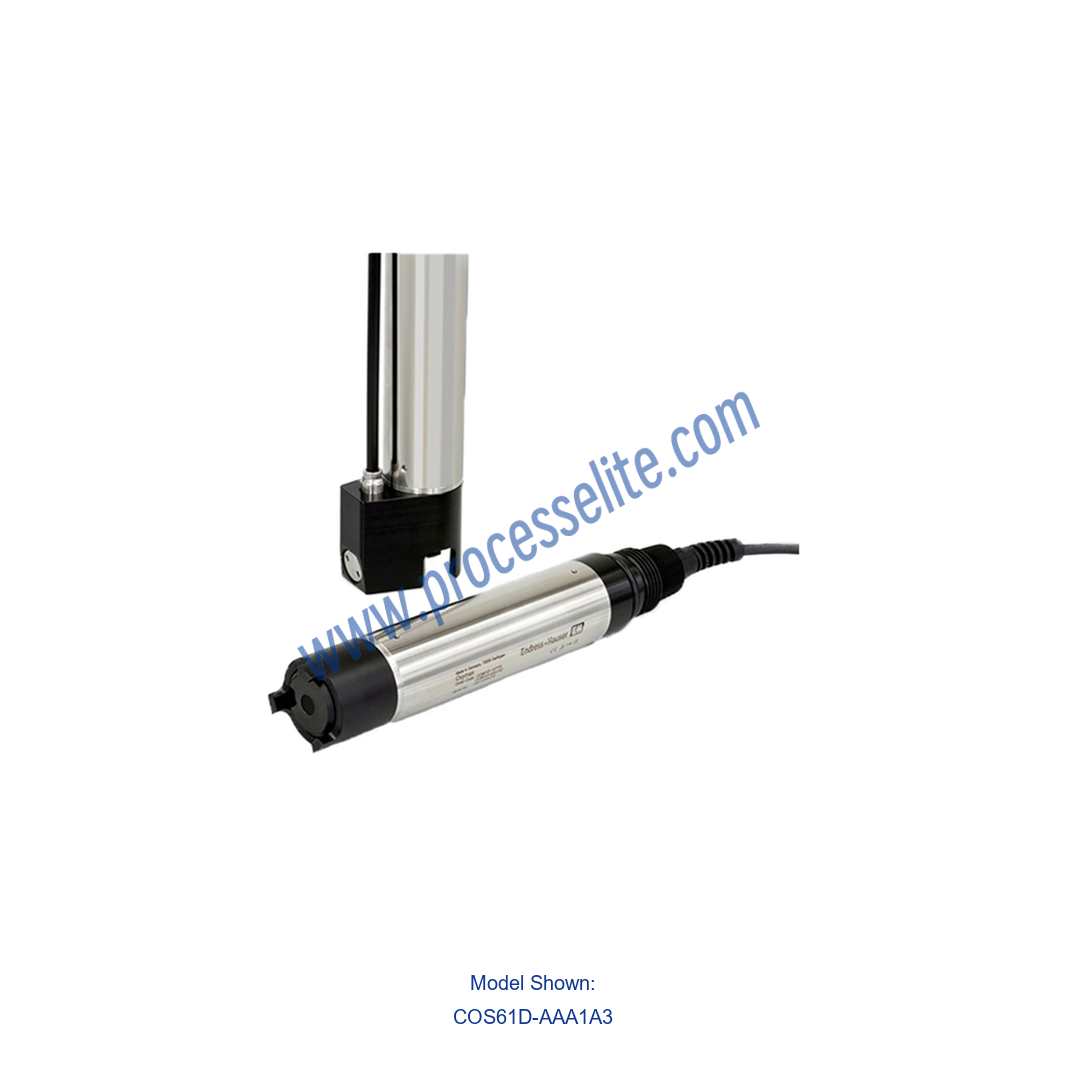
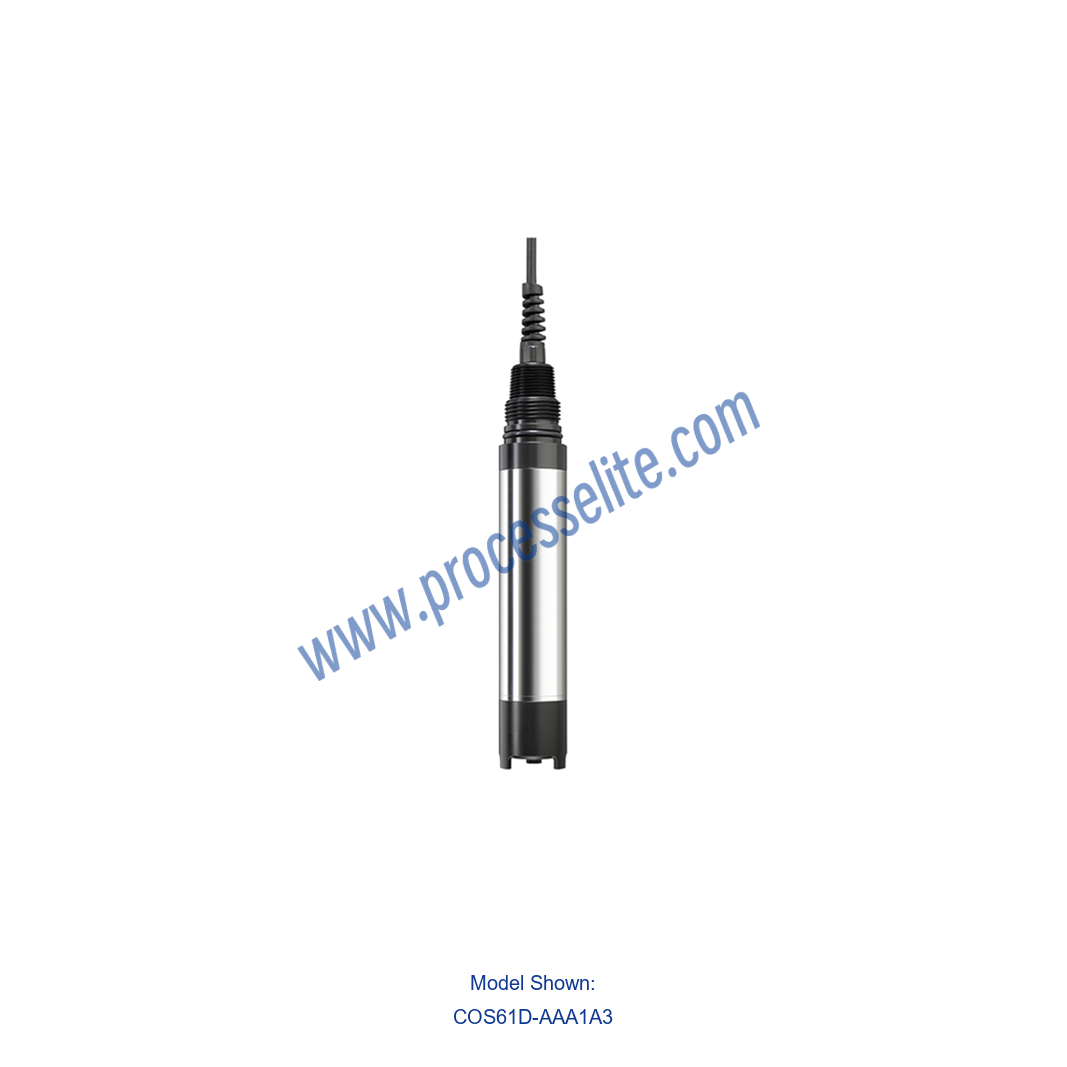
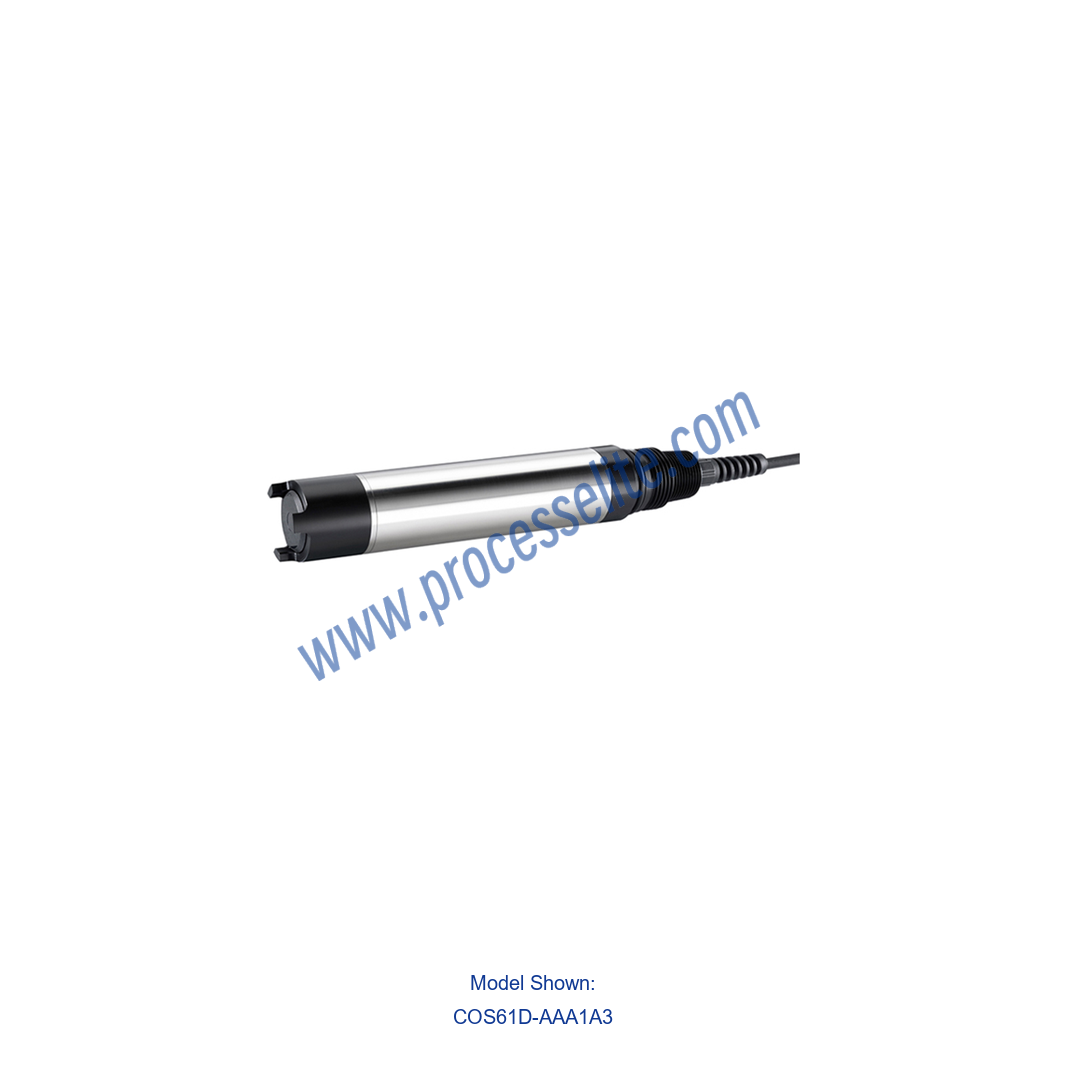
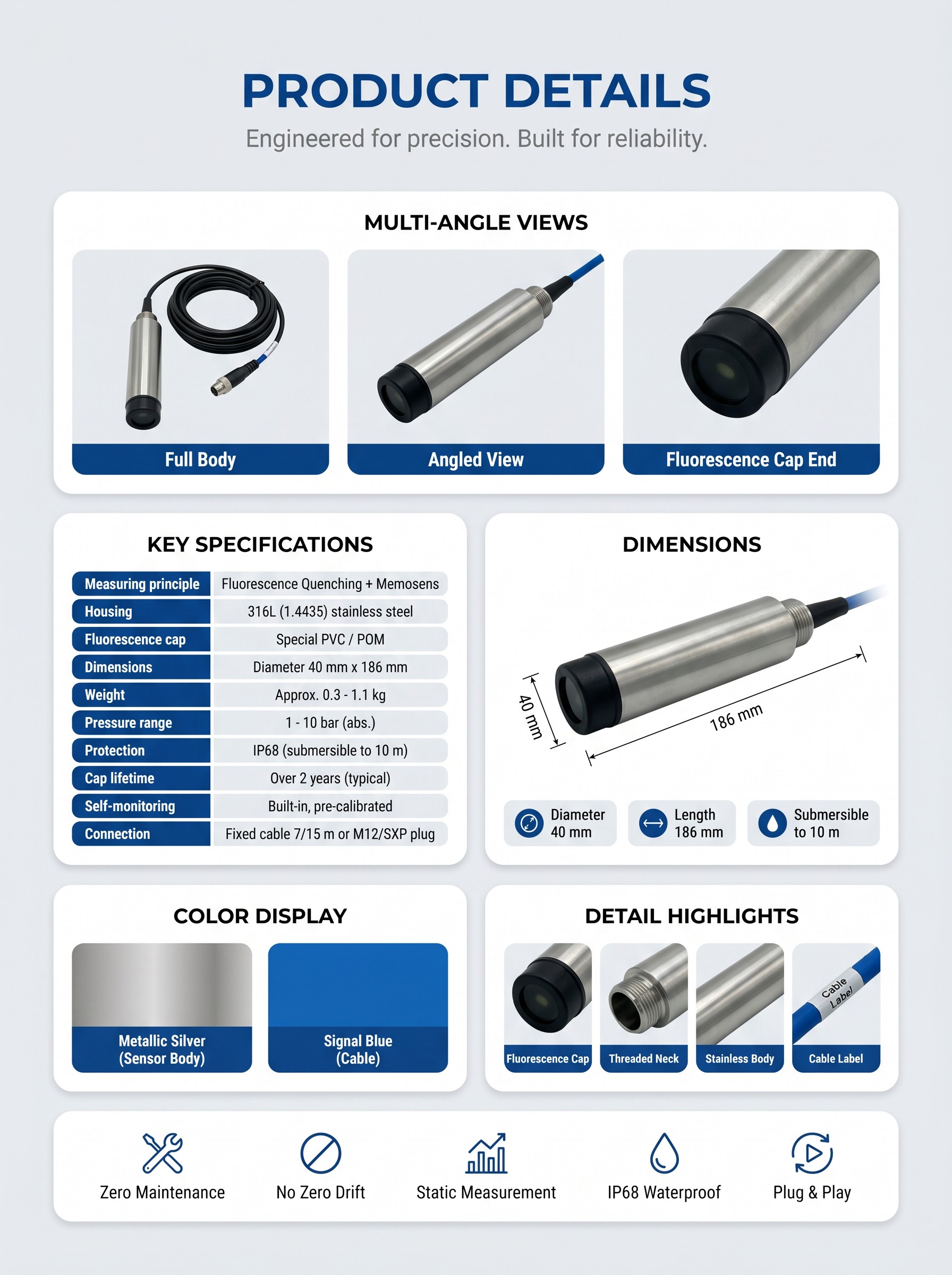
The Oxymax COS61D is a high-performance digital dissolved oxygen sensor that provides fast, accurate, and drift-free measurement. It features low maintenance requirements, broad application versatility, and easy operation.
Its long-term stable, oxygen-selective fluorescent layer ensures reliable measurement without interference. Featuring Memosens digital technology, the Oxymax COS61D provides high process and data integrity while simplifying operation. The sensor can be calibrated in the laboratory and supports predictive maintenance.
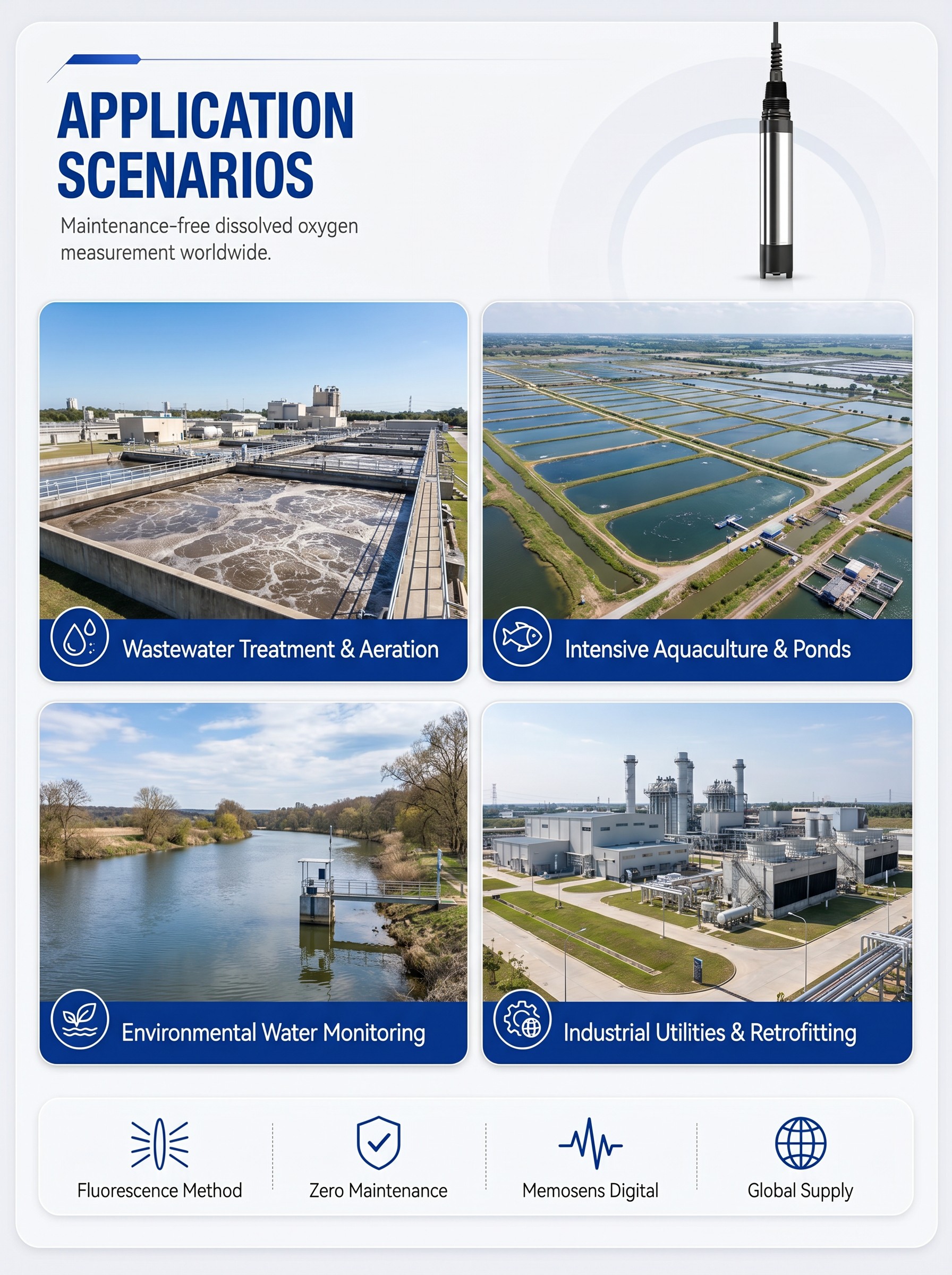
The Oxymax COS61D is designed for dissolved oxygen measurement in:
• Wastewater treatment plants
• Drinking water treatment plants
• Utility applications
• Fish ponds