How it works
The core principle of a temperature transmitter is to convert the non‑electrical quantity (temperature) detected by temperature sensors into standard electrical signals. It connects to sensors such as thermocouples (TC) or Resistance Temperature Detectors (RTD).
For thermocouple signals: cold‑junction compensation is performed (to correct the influence of cold‑junction temperature variation), weak thermoelectromotive force is amplified, and linearization is carried out (since thermoelectromotive force has a non‑linear relationship with temperature).
For RTD signals: generally powered by a constant‑current source, resistance variation is converted into voltage variation, which also undergoes linearization (due to the non‑linear resistance‑temperature relationship).
The circuit also filters signals to suppress interference. The conditioned voltage signal is fed into a voltage‑to‑current conversion circuit (V/I converter), which accurately converts it into the industry‑standard 4‑20 mA DC current signal (or other standard signals). The magnitude of this current signal corresponds linearly to the measured temperature range. Featuring strong anti‑interference capability, it is suitable for long‑distance transmission to control systems.
Key features
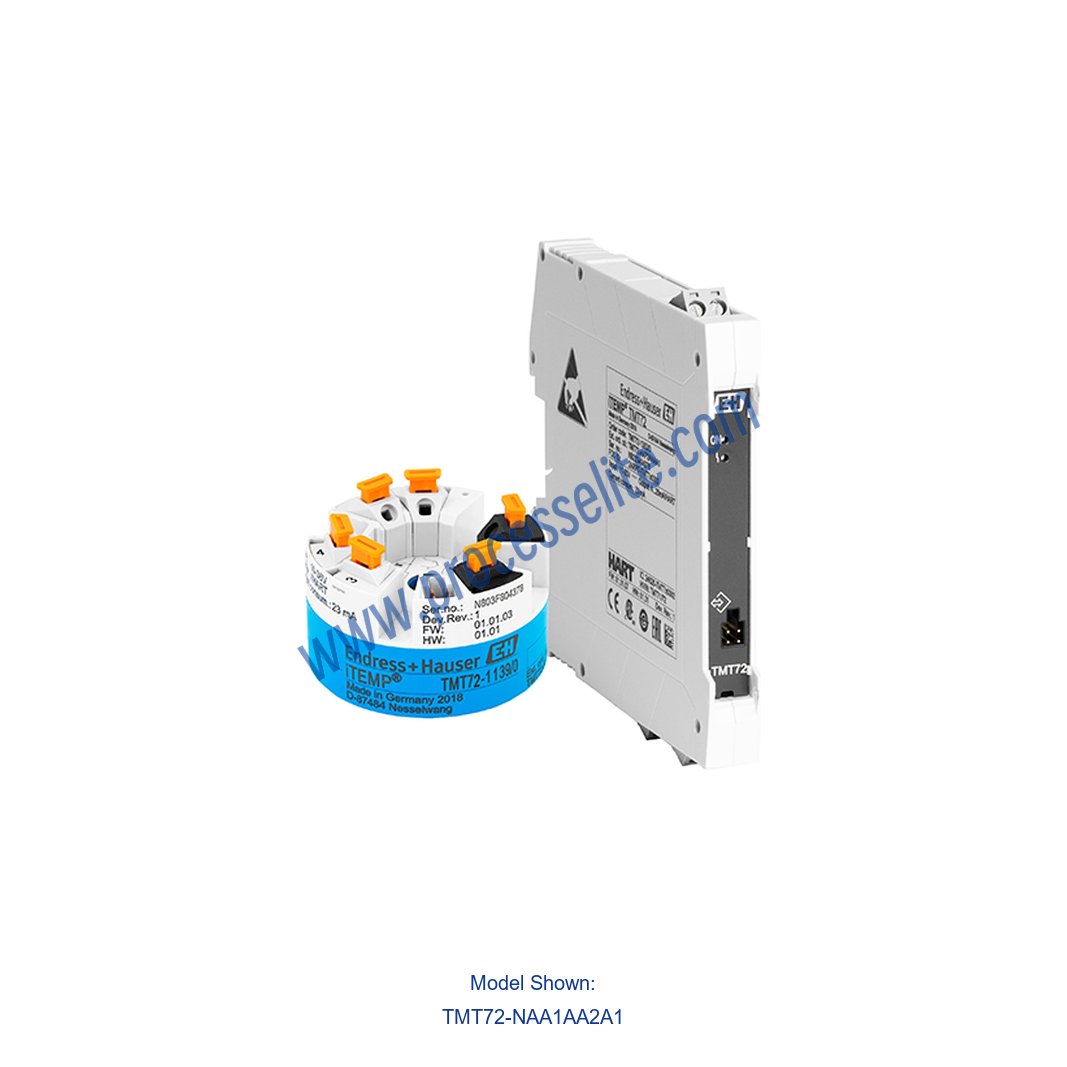
• Universal temperature transmitter with Bluetooth® function scales various input signals into 4 … 20 mA analog output signals via HART® communication
• Improves productivity and extends plant uptime
• Universal input signals: Resistance Temperature Detector (RTD), thermocouple (TC), resistance (Ω), voltage (mV)
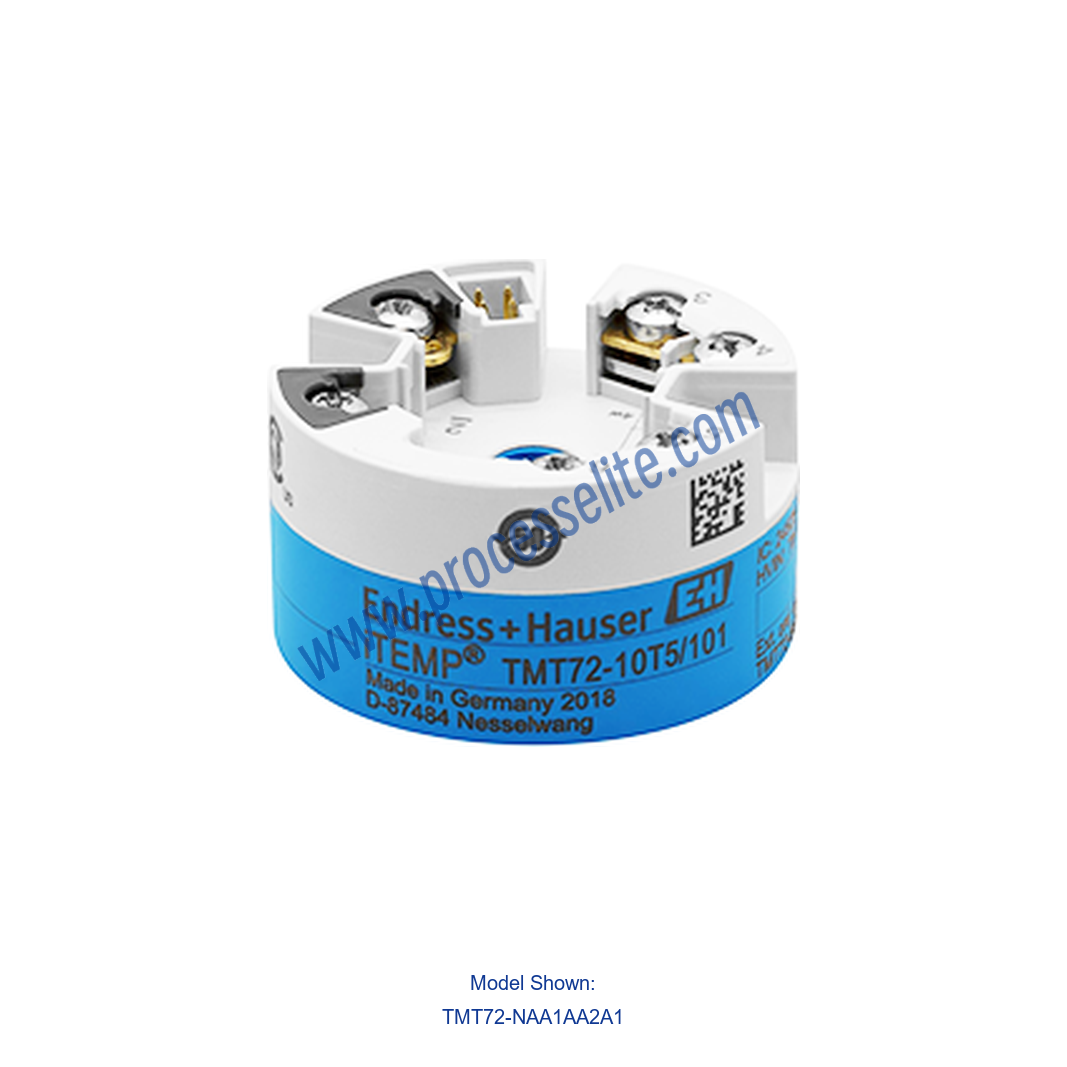
• Installed in Type B connection heads (flat‑type) complying with DIN EN 50446
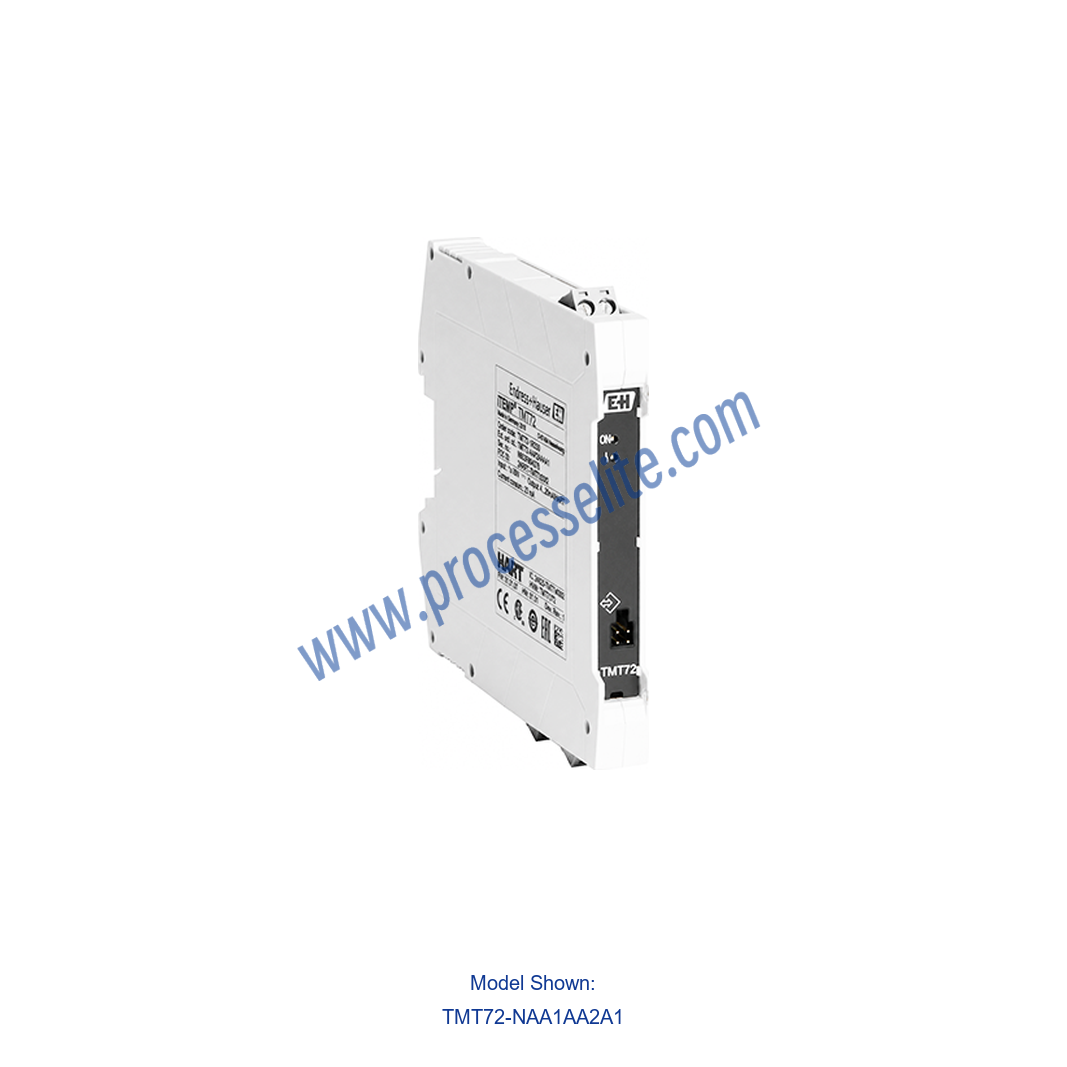
• Cabinet installation with DIN‑rail housing
• Permitted for use in field‑mounted housing for Ex d flame‑proof applications
• International approvals for safe operation in hazardous areas
• Multiple mounting methods and housing types: Type B connection head, DIN rail; polyester coating, polyurethane coating and stainless‑steel housing available as options
• Built‑in Bluetooth® interface for wireless remote display of measured values; configuration can also be performed via the Endress+Hauser Smart Blue app
• Diagnostic information compliant with NAMUR NE107
• Optional pluggable measured‑value display unit TID10
• Maximum measurement accuracy achieved through sensor‑transmitter matching
Typical applications
It delivers high reliability, high measurement accuracy and excellent long‑term stability when used in critical process sections across all industries. This configurable transmitter accepts not only RTD and thermocouple (TC) signals but also resistance and voltage signals via HART® communication, and subsequently converts them into output signals. Diagnostic information complies with NAMUR NE107. It enables seamless integration into major control and asset management systems. Remote operation is available through Endress+Hauser Smart Blue utilizing the integrated Bluetooth® technology.